
New Trucks vs Remanufactured Trucks: Full Cost & Performance Comparison
Introduction
When expanding fleets or renewing heavy equipment, every construction, mining and logistics operator faces one critical decision: buying new trucks or remanufactured trucks.
New Trucks VS Remanufactured Trucks
Brand New heavy trucks have always been regarded as the safest option, but they come with extremely high purchase costs, severe initial depreciation and long delivery delays.
In contrast, modern standardized remanufacturing trucks for sale have become a mainstream alternative for global fleet owners, delivering near-new performance with far lower investment risk.
To help you make accurate asset investment decisions, we break down the full differences between new trucks and remanufactured trucks in terms of cost, performance, service life, delivery cycle and long-term operating benefits.
Upfront Purchase Cost & Financial Pressure
Brand-New Trucks —— Brand New heavy trucks require massive one-time capital investment. The high factory price, plus import tariffs, shipping fees and insurance costs, greatly increases the threshold for fleet expansion. Most brand new new truck purchases rely on high-interest financing, bringing long-term financial burden and low capital flexibility.
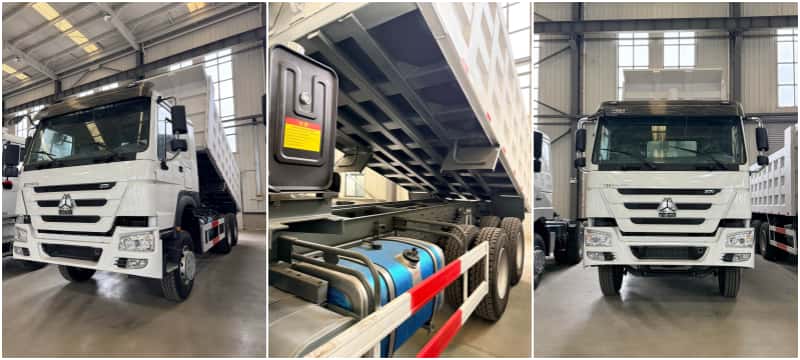
Remanufacturing Trucks for sale —— Certified remanufacturing trucks for sale only cost 50%–70% of new trucks. With half the investment, buyers can double their fleet scale instantly. The low upfront cost avoids financial leverage risks, improves cash flow flexibility, and allows enterprises to allocate more funds for project operation, labor costs and business expansion.
Depreciation Rate & Asset Preservation
Brand-New Trucks —— Brand New heavy trucks suffer the most severe depreciation in the first two years. Once a new truck is put into operation, its market value drops rapidly. A large part of your investment is lost purely on asset depreciation, rather than creating actual project revenue.
Remanufacturing Trucks for sale —— Remanufactured trucks have ultra-stable asset value. The initial depreciation curve is flat and predictable. Since the vehicle has already passed the fastest depreciation cycle of new equipment, its resale value remains stable for years. For fleet companies focusing on long-term asset preservation, remanufactured trucks bring significantly lower asset loss.
Performance & Working Stability
Brand-New Trucks —— Brand New heavy trucks feature original factory performance, but they require strict running-in periods. During the initial stage of use, engine power, transmission coordination and hydraulic sensitivity are not fully stabilized. Improper operation during running-in may cause permanent mechanical wear.
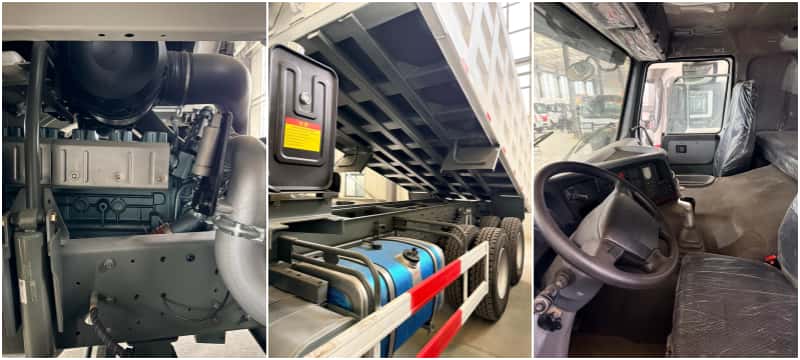
Remanufactured Trucks —— Professional Remanufacturing Trucks for sale undergo full disassembly, core system overhaul, component renewal and 72-hour full-load durability testing. All running-in instability is eliminated in the factory. After delivery, the truck can directly adapt to full-load mining, haulage and construction operations with stable power, sensitive response and zero running-in risks, achieving over 95% of new truck comprehensive performance.
Failure Rate & Field Adaptability
Brand-New Trucks —— Brand New heavy trucks adopt the latest factory configurations and electronic systems. While technically advanced, they have poor compatibility with harsh mining and remote construction sites. Once failures occur, spare parts are scarce, and maintenance is complicated, resulting in long project downtime.
Remanufactured Trucks —— REMAN ROAD Remanufacturing Trucks for sale are based on mature, stable and widely recognized classic truck platforms. The mechanical structure is simple, durable and highly adaptable to harsh working conditions. Global spare parts supply is sufficient, and local maintenance technicians are highly familiar with the models. The overall field stability and maintainability are stronger than many new truck versions.
Delivery Cycle & Project Timeliness
Brand-New Trucks —— Global Brand New heavy trucks supply is frequently affected by factory production cycles, component shortages and international shipping delays. The waiting period often lasts 6–12 months, making it impossible for fleet owners to seize short-term construction peaks and business opportunities.
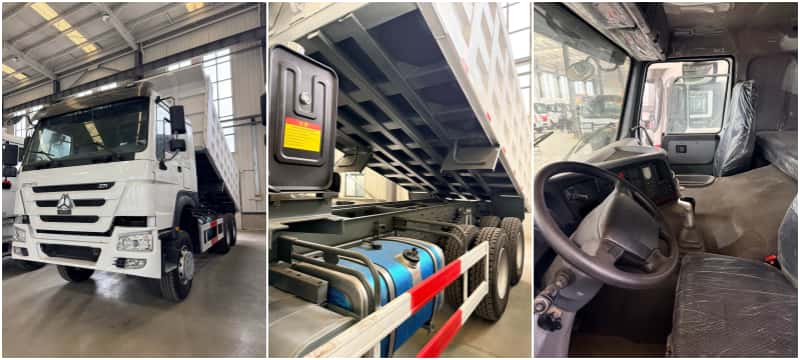
Remanufactured Trucks —— Standardized remanufactured trucks are mass-produced according to fixed processes, with stable inventory and fast delivery. Vehicles can be delivered and put into operation in the shortest time, helping customers quickly supplement fleet capacity and maximize project revenue.
Warranty & After-Sales Experience
Brand-New Trucks Brand New heavy trucks official warranty is strict but limited. Many failures caused by harsh working conditions are not covered. After-sales procedures are complicated, and accessory waiting cycles are long.
Remanufactured Trucks REMAN ROAD provides transparent and reliable global warranty for remanufactured trucks. Core components including engine, gearbox and drive axle are fully covered. The after-sales response is fast, and maintenance costs are far lower than new vehicles, ensuring worry-free fleet operation.
Environmental & Sustainable Value
Manufacturing a Brand New heavy trucks consumes massive amounts of steel, energy and industrial water, generating huge carbon emissions. In comparison, truck remanufacturing saves over 85% of raw materials and energy consumption, conforming to global green development policies, carbon neutrality standards and large enterprise green procurement requirements.
New Trucks vs Remanufactured Trucks Conclusion
Brand New heavy trucks are suitable for users with unlimited budgets and long-term fleet planning. However, for most global mining contractors, construction teams and logistics fleets, remanufactured trucks are a more rational investment choice. They deliver new-machine-level stability, ultra-low depreciation, faster ROI and lower operating risks. Choosing standardized remanufactured trucks is no longer a budget compromise, but a professional asset optimization strategy for modern equipment fleets.