The Second Life Contract: What Certified Remanufacturing Promises an Asset?
Intro
Certified remanufacturing carries an implicit but binding second-life contract: a set of measurable promises made to the truck asset itself, and by extension, the fleet that operates it. This is not a vague marketing pledge. It is written into inspection rules, test thresholds, warranty terms and traceability records. This article unpacks what this contract covers, where its boundaries lie, and how it differs from the loose commitments attached to rebuild or reconditioned trucks.
When a heavy truck enters certified remanufacturing, it exits as an asset with a reset lifecycle. Many buyers only focus on the warranty document handed over at delivery. Yet the second-life contract begins long before handover, locked in by the engineering standards applied during regeneration. It defines what the truck is expected to do, how long it should perform, and what data backs those commitments. Unlike informal repair work, where promises are limited to “it runs”, this contract sets clear performance baselines, maintenance expectations and accountability limits.
What the Second-Life Contract Actually Means?
This “contract” is a framework of mutual commitments between the remanufacturer, the asset and the fleet owner.
- The remanufacturer promises to restore the truck to a defined OEM-aligned performance baseline.
- The asset is granted a predictable second service window with standard service intervals.
- The fleet operator agrees to follow prescribed maintenance schedules to preserve that performance.
It is not an open-ended guarantee that the truck will never fail. It is a controlled, auditable agreement about the asset’s reset capability and operating envelope.
Promise 1: Performance Reset to Defined OEM Baseline
The core clause of the contract is functional parity against the original design specification.
- Powertrain power, torque output and fuel consumption must fall within OEM permitted tolerances.
- Braking balance, steering response, suspension geometry and electrical behaviour match factory design targets.
- Emission control systems are calibrated and validated to their original compliance standard.
- Structural load capacity remains unchanged; no hidden derating or downgrade is permitted unless explicitly disclosed.
This separates it from rebuilds, where only one assembly is fixed and overall vehicle performance remains unvalidated.
Promise 2: A Reset, Predictable Service-Life Window
Certified remanufacturing resets the asset’s usable service clock.
- A defined second-life service period is established, based on core grade and reman scope.
- Recommended service intervals mirror OEM schedules for a new unit of the same model.
- Wear components have all been replaced per standard rules, rather than run to visible failure.
The contract states that, with proper maintenance, the truck will deliver a predictable runtime before its next major assessment. Reconditioned or casually rebuilt trucks cannot offer this lifecycle reset. Their age and wear history continue to accumulate without formal resetting.
Promise 3: Full Traceability and Documented Evidence
Every promise must be provable.
- NDT reports, dimensional checks, machining logs, bench test data and final road test results are linked to the VIN.
- Records list which components were reused, reworked or replaced.
- The full file is retrievable for warranty claims, third-party audits and ESG carbon accounting.
Traceability is not an optional extra. It is the evidence that proves the contract terms were fulfilled during production. Without these records, the second-life promises cannot be independently verified.
Promise 4: Defined Warranty Boundaries
Warranty is the commercial enforcement layer of the second-life contract.
- Certified reman warranty typically covers the whole vehicle, not only selected assemblies.
- It clearly lists covered failure modes, excluded consumables, maintenance prerequisites and claim procedures.
- It excludes failures caused by overload, improper modification, neglect or off-spec maintenance.
Workshop rebuilds usually only warrant the repaired component. That narrow scope means there is no holistic second-life commitment for the whole vehicle.
Promise 5: Eligibility for Future Re-evaluation and Circular Reuse
The contract also looks beyond the immediate second life.
- At the end of this service cycle, the asset can be reassessed for residual asset value.
- If structural integrity still meets the entry gate criteria, it may re-enter the reman loop for another regeneration cycle.
- If fatigue or corrosion has crossed irreversible thresholds, the contract acknowledges the asset will exit into recycling.
This clause recognises that no asset can be regenerated infinitely. The circular promise has clear physical limits rooted in material science.
What the Second-Life Contract Does NOT Promise?
Understanding exclusions is equally critical for fleet planning. It does not guarantee:
- Infinite service life or immunity from component wear
- Tolerance for overload, misuse, unapproved modification or poor maintenance
- Identical lifespan to a brand-new truck (though performance baseline is matched)
- Automatic eligibility for a third reman cycle, regardless of in-service degradation
These limits prevent unrealistic expectations and protect both remanufacturers and fleet operators from misaligned assumptions.
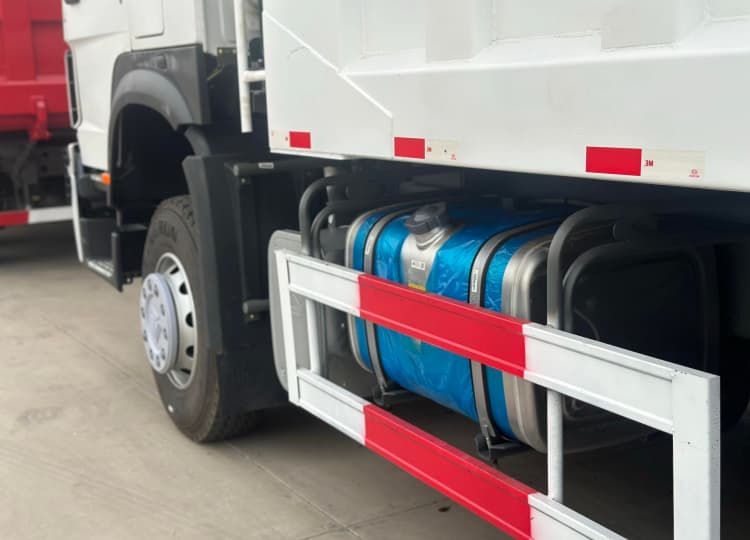
How Mislabeled Products Break the Second-Life Contract?
When rebuilds or reconditioned trucks are falsely marketed as remanufactured truck, there is no valid second-life contract.
- No full disassembly or structural NDT means hidden inherited defects remain.
- No fixed wear-part replacement schedule leaves ageing components in place.
- No comprehensive testing or traceability means there is no proof of baseline performance.
- Warranty coverage is narrow and often ambiguous.
Fleets purchasing these units are buying a drivable truck, not a formally contracted second-life asset.
How REMAN ROAD Formalises This Contract?
REMAN ROAD standardises the terms of this second-life commitment for cross-border consistency:
- Standard acceptance checklists define the performance baseline for each model.
- Core tier grading sets realistic expected second-life service windows.
- Required documentation packages form the permanent record of contract fulfilment.
- Certification labels clearly distinguish remanufactured truck from repair-only units.
- Auditors verify that production steps match the promises made to the asset.
This framework turns an informal promise into a consistent benchmark that buyers, financiers and ESG auditors can rely on.
Closing
The second-life contract is the binding set of engineering, documentation and warranty promises that certified remanufacturing extends to a heavy truck asset. It guarantees a reset OEM-aligned performance baseline, predictable service intervals, auditable traceability, clear warranty terms, and the possibility of future regeneration — all with well-understood physical and operational boundaries.
For fleet teams, recognising this contract helps separate genuine circular assets from ordinary repaired trucks, and sets realistic expectations for TCO planning, risk control and sustainability reporting.