True Remanufacturing Read From the Buyer’s Side: What You Are Actually Buying?
Introduce
Most buyers start with a simple question: what truck am I getting, and what am I paying for? It is easy to judge the offer by appearance, mileage, price and the seller’s description of “remanufactured”.
But from the buyer’s standpoint, genuine true remanufacturing is not merely a used truck that has been fixed up. You are not only buying metal, tyres and a running engine. You are buying a set of engineering judgements, validated safety limits, traceable proof and a predictable TCO profile. Understanding this changes how you evaluate every tender, inspection report and asset handover package.
You are buying a qualified core with measured residual structural margin
The first thing you purchase is a core that has passed objective screening.
Before any rebuild work began, the asset went through service history review, dimensional checks and NDT fatigue scanning on all critical load-bearing sections. That means the frame, axle housings and other high-stress components have been checked for hidden cracks, prior accident damage and permanent deformation.
This is the foundational asset. If the core failed screening, it would have been routed to component harvesting or recycling, not true remanufacturing. You are not buying a patched truck with invisible, unquantified fatigue. You are buying one whose remaining safe structural capacity has been assessed and confirmed.
Crucially, you are not buying a new truck. The residual margin is finite. It comes with boundaries, not unlimited heavy-duty capability.
You are buying a full-system lifecycle reset, not a bundle of replaced parts
Many buyers mistakenly assume “new parts equal true remanufacturing”. Sellers can swap out tyres, hoses, seats and overhaul one engine, while leaving braking hydraulics, wiring harnesses and cooling balance untouched.
With true remanufacturing, you buy a system-level reset. The whole truck is disassembled, every component is graded, mandatory wear items are renewed, reusable parts are regenerated within strict machining limits, and all subsystems are recalibrated to work in harmony.
The final proof is loaded full-vehicle testing. It verifies thermal balance, braking distribution, driveline vibration and electronic coordination under working load, not just idle or a short test drive.
So you are not buying a collection of individually rebuilt components bolted together. You are buying a balanced, validated system.
You are buying a traceable, auditable evidence package
A physical truck can be touched and driven. The evidence package is the less visible, yet equally valuable part of your purchase.
This package ties to the vehicle’s unique identifier. It includes fatigue scan logs, component grading records, machining tolerance records, part material specifications, calibration snapshots and full loaded validation data. It is accessible for independent verification.
This evidence serves practical purposes for your fleet. It supports insurance underwriting, financing reviews, internal fleet audits and future resale. When the reman truck reaches the end of its second life, the same records help the next stakeholder decide whether it qualifies for another reset, harvesting or recycling.
Without this transferable trail, you are only buying a truck with a seller’s verbal guarantee. With it, you buy provable reman status.
You are buying a defined duty envelope and clear risk boundaries
One of the most overlooked items in the purchase is a set of agreed operating limits.
After testing, the reman truck receives duty classification. It defines approved payload, terrain type and cyclic load intensity. This tells your fleet team where the truck can safely operate and where it should not be deployed.
You are buying a risk-bounded asset. The seller and verification body confirm the safe window, but they do not promise unlimited performance. If you deploy the truck within its approved envelope, wear and margin consumption follow predictable curves. If you push it beyond the limits, failure risk rises sharply.
This is not a defect. It is a transparent feature of true remanufacturing. It lets your team match assets to workloads and model realistic TCO.
You are buying a predictable economic profile, not just a lower upfront price
Buyers often fixate on the initial purchase cost versus a new truck. But genuine true remanufacturing’s value lies in predictable economics.
You gain a clearer view of depreciation rate, expected downtime risk, maintenance cadence and residual value at the end of the second life. The standardised remanufacturing workflow and traceable records make the asset financeable and insurable. Lenders and insurers can model risk because the baseline is documented.
By contrast, a low-cost cosmetic rebuild may look cheap at the point of sale, but it carries hidden, unquantified downtime risk. Its future residual value is hard to estimate, and many financiers will treat it as an unproven used truck.
In short, you are buying forecastability. That is the difference between a bargain and a reliable fleet asset strategy.
You are buying a transferable circular asset
A genuine reman truck is designed to circulate within the ecosystem.
At the end of its second life, it is not automatically scrap. Based on a new round of fatigue assessment, it can move into another lifecycle reset, component harvesting or recycling. The audit trail you receive travels with the vehicle, supporting that next decision.
This matters for fleet rotation, resale and ESG reporting. You are not buying an asset with a single, static end point. You are buying a flexible, value-carrying unit that fits into the circular sorting chain.
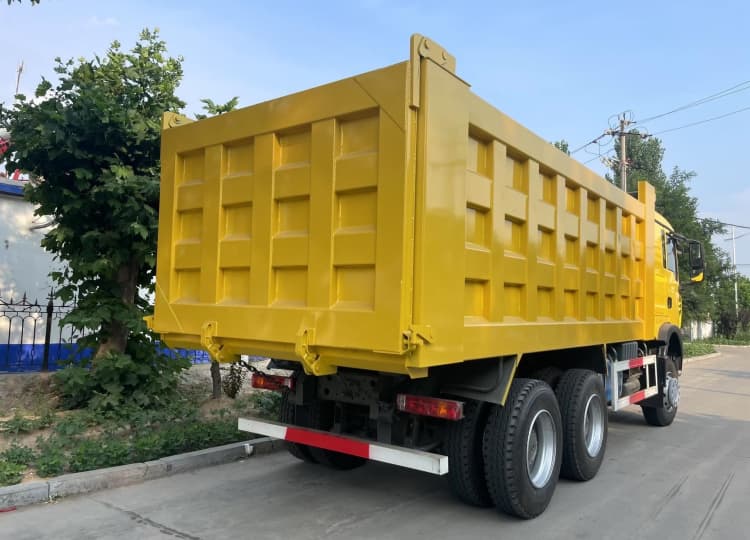
What you are not buying?
It is equally important to clarify what is excluded from the purchase:
- You are not buying a truck with the full original factory safety margin of a brand-new unit.
- You are not buying unlimited operating freedom without duty constraints.
- You are not buying a guarantee that no failure will ever happen. Risk is bounded, not eliminated.
- You are not buying a marketing promise based on paint, shine or new decals.
Any seller framing reman truck as “as good as new” is misrepresenting the product.
Practical checklist for buyers
Before you accept a reman truck, ground your evaluation on what you are actually purchasing:
- Confirm the NDT fatigue and dimensional reports tied to the VIN.
- Ask for full component grading logs, not just a list of replaced parts.
- Review loaded full-vehicle validation test data, not only static test results.
- Obtain the formal duty classification and operating envelope document.
- Confirm the full audit trail can be shared with independent verification, finance and insurance parties.
- Treat visual condition as protective finishing, not proof of lifecycle reset.
Closing thought
From the buyer’s perspective, true remanufacturing is more than a vehicle transaction.
You are buying a structurally qualified core, a system-level lifecycle reset, a transferable auditable evidence package, clear duty boundaries and predictable long-term economic performance. When you understand exactly what you are purchasing, you can separate genuine true remanufacturing from superficial rebuilds and make procurement decisions aligned with your fleet’s TCO and risk strategy.