Why Remanufacturing Work Preserves Engineering Value That Recycling Destroys?
Introduce
Both remanufacturing work and recycling belong to the circular economy, but they capture fundamentally different types of value. Recycling melts down metal frames, cast housings and forged components to produce raw alloy for new production. It saves material, yet it erases nearly all the engineering investment built into the asset.
Standard remanufacturing workflow takes a different path. For cores that pass fatigue screening, it retains the original engineered structure and only renews worn subsystems. It preserves the value embedded in design, forging, precision machining and validated structural geometry. This distinction is not just theoretical; it shapes how the ecosystem sorts cores into their highest-value circular pathway.
What is embedded engineering value?
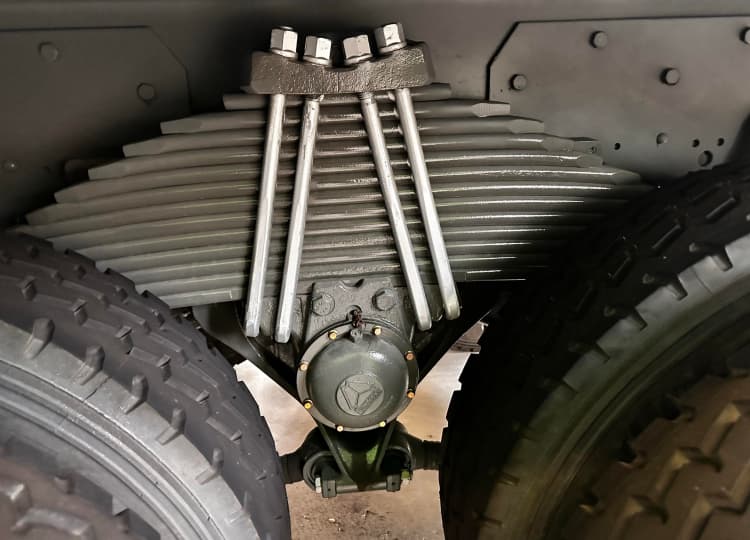
A heavy vehicle’s frame, axle housing, gearbox casing and load-bearing castings carry far more value than the price of the metal itself.
That value accumulates through upstream industrial work: material formulation, high-pressure forging, heat treatment, precision machining, finite-element validation and factory load testing. These steps turn raw ore into a component with predictable strength, fatigue resistance and dimensional stability. This is embedded engineering value.
When the asset reaches the end of its first service life, most of these structural parts may still sit within safe residual margin limits. The failures are usually concentrated on wearing parts: seals, bearings, friction linings, sensors and soft consumables. The expensive, energy-intensive engineering work invested in the core structure remains intact.
Recycling reduces these carefully engineered parts back to homogeneous molten metal. All the shaping, heat treatment and structural validation work is lost. Remanufacturing keeps that finished engineering foundation and only replaces the worn, time-limited components.
Recycling recovers material value, not functional design value
Recycling excels at material recovery. It keeps metal out of landfill and reduces demand for virgin ore. This is an important sustainability function, but it represents a downcycle of value.
Melting resets the material back to an undifferentiated commodity. A forged axle from a heavy truck becomes indistinguishable from any other scrap steel in the melt pool. All the unique design characteristics, load-rated geometry and heat-treated grain structure are destroyed. To get that engineered component back, manufacturers must repeat the full energy-intensive production sequence: casting, forging, machining and heat treatment once again.
In economic terms, recycling recovers the commodity value of the metal. Standard remanufacturing workflow preserves the higher-tier functional value of the already-finished engineered part.
Reman retains the proven structural baseline of the core
Every OEM heavy vehicle component has already passed factory qualification and real-world field validation. Its geometry, stress distribution and mounting interfaces are matched to the wider vehicle system.
When a qualified core enters standard remanufacturing workflow, this original structural baseline is retained. NDT and dimensional checks confirm it still holds its design form and sufficient residual margin. The standard remanufacturing workflow then calibrates subsystems to match that existing structure.
By contrast, recycling discards this proven baseline. Any replacement component made from recycled steel still needs full re-manufacturing and re-validation. Even if the raw material is recycled, the engineering work to recreate the part must be reinvested.
This is why standard remanufacturing work delivers greater energy efficiency than recycling-plus-new-part production. It avoids repeating the most carbon-heavy stages of primary forming.
The boundary: reman only applies when the core remains viable
This does not mean standard remanufacturing workflow is always superior to recycling. The framework respects a clear sorting rule.
If a core has irreversible fatigue, deep cracking or permanent deformation, its embedded engineering value is already compromised. No amount of component renewal can restore its reliable structural baseline. For such cores, recycling becomes the appropriate pathway. It recovers material value when engineering value is no longer salvageable.
Standard remanufacturing work is reserved for cores where the original engineered structure is still sound. It is the higher-value pathway only when the core passes safety screening. For unqualified cores, forcing reman would create unsafe assets and waste capital.
System compatibility value is also preserved
Engineering value goes beyond individual castings and forgings. It includes the matched system architecture: mounting points, sensor interfaces, driveline alignment and cooling flow balance designed by the original manufacturer.
A reman reset keeps all these factory-matched interfaces intact. Renewed subsystems are calibrated to work with the existing structural envelope.
Recycling breaks this matched system apart. Once melted, the unique system compatibility is gone. New replacement parts must be sourced, and integration risks are reintroduced. This is a major hidden cost of relying purely on recycling and new component supply.
How this shapes circular value sorting across the ecosystem?
As a neutral bridge connecting stakeholders, the framework creates a clear value hierarchy.
- The highest circular value pathway for a qualified core is genuine standard remanufacturing work. It preserves embedded engineering value and delivers a usable second-life asset.
- The next tier is component harvesting: extracting individual sound parts from a non-reman core for spare-part reuse. This retains component-level engineering value without supporting a full vehicle reset.
- The final tier is recycling: recovering raw material commodity value when engineering value can no longer be preserved.
This hierarchy prevents the common linear-economy habit of scrapping structurally sound cores prematurely. It also prevents the opposite mistake: trying to reman cores whose engineering integrity has already failed.
Misconception: “recycling is the most sustainable choice”
Many market participants assume recycling is always the most sustainable circular action. That view overlooks value hierarchy.
Sustainability is not only about diverting waste. It is also about maximising useful service life per unit of embodied carbon. A qualified reman truck extends the service life of high-embodied-carbon engineering assets. Recycling, while necessary, resets the carbon clock and requires fresh industrial energy input to rebuild the same functional capacity.
Recycling is a vital fallback, not a replacement for reman where reman is technically safe.
Closing thought
Recycling preserves material value, but destroys the embedded engineering value built into forgings, castings and validated structural geometry. Remanufacturing, for properly screened cores, protects that already-completed engineering investment.
It keeps the original factory structural baseline intact, renews only the wearing subsystems, and extends the useful life of the asset without melting its engineered foundation. This value hierarchy is a key reason genuine standard remanufacturing work sits above recycling as the preferred circular pathway for eligible heavy-duty assets.